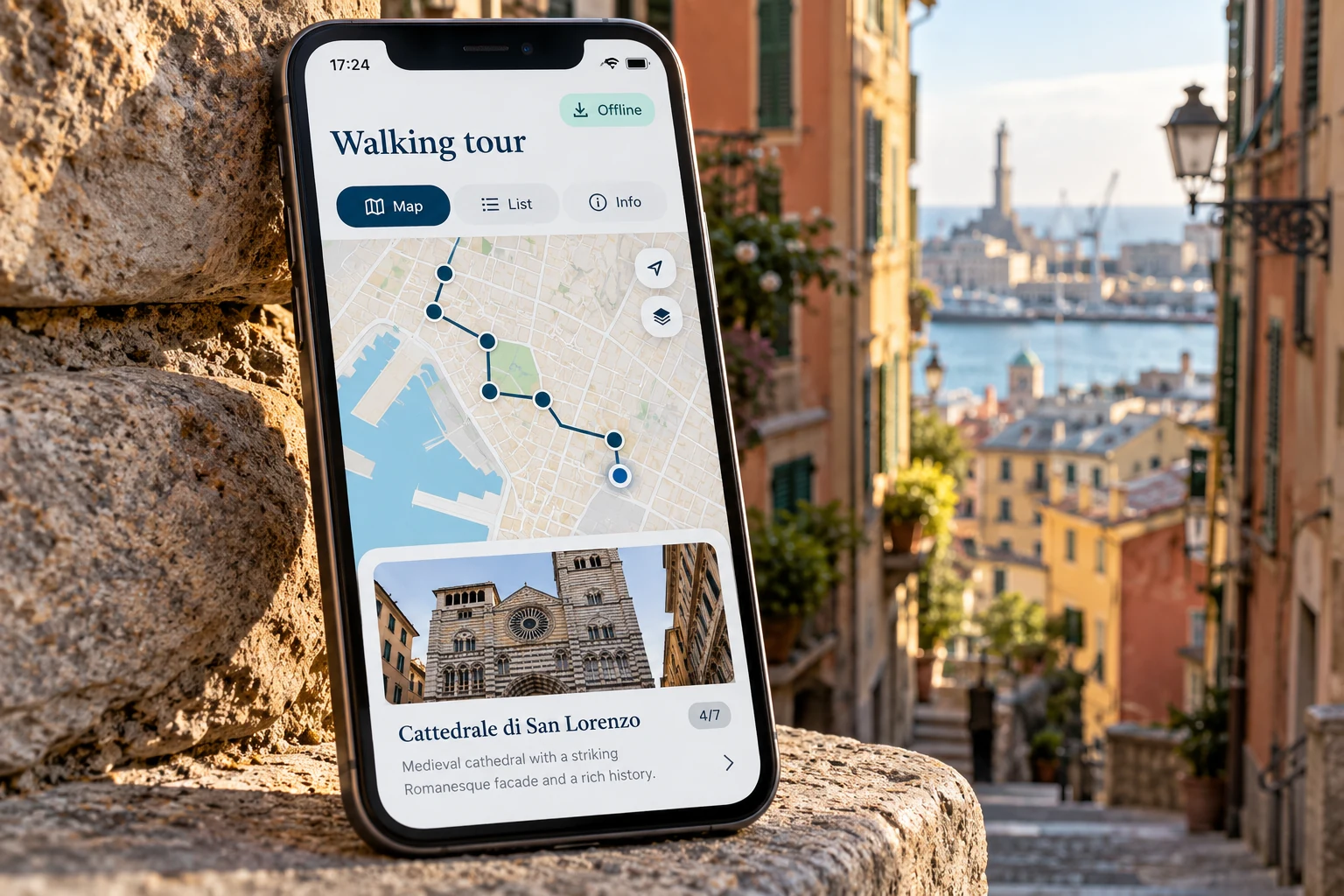
In this technical ZenaWalk case study, we examine how engineering an offline-first PWA walking tour platform in Genoa modernizes historic Italian tourism with Flask, OpenRouteService geographic routing, Stripe webhook fulfillment, and hybrid SSG rendering.
ZenaWalk Case Study: Overcoming Urban Connectivity Obstacles
ZenaWalk was conceived to disrupt commercial audio-guide monopolies by connecting certified local Italian tour guides directly with independent travelers. Travelers explore curated pedestrian itineraries via an interactive, browser-based walking companion featuring synchronized multi-lingual audio stories, GPS waypoint tracking, and rich historical narratives.
However, the platform's initial iteration encountered three critical architectural bottlenecks that capped conversion and scalability:
1. The 236KB SPA Duplicate Content Penalty
Every itinerary route was served as an identical 236KB JavaScript SPA clone. Google Search crawlers detected 99% DOM similarity across URLs, flagging the entire route catalogue as duplicate content and refusing to index individual tours.
2. GPS Dropouts in Medieval Canyons
Towering 6-story 16th-century stone facades in Genoa completely degrade 4G/5G mobile signals. Tourists following routes experienced audio buffering freezes, blank maps, and lost turn guidance mid-walk.
3. Stripe Payment Fulfillment Race Conditions
Database autocommit quirks between Stripe Checkout redirects and webhook asynchronous deliveries occasionally marked an order as paid before creating the tour unlock record, locking paid users out of their purchased tours.
Engineering the Solution: High-Performance Architecture
1. Automated Hybrid SSG Pipeline (Zero-JS Crawler Landing Pages)
To resolve the search indexing crisis, Sparknest engineered an automated Static Site Generation (SSG) pipeline (generate_seo_pages.py). Instead of forcing search engine bots to execute heavy JavaScript bundles, the script compiles standalone, high-velocity HTML landing pages for each itinerary:
- Lightweight Semantic DOM (<12KB): Contains rich route descriptions, waypoint timelines, estimated walking times, and elevations with 100% crawlability.
- Microdata & Schema.org JSON-LD: Automatically injects compliant
TouristTrip,Itinerary, andGeoCoordinatesstructured data, earning rich Google SERP snippet badges. - Progressive Enhancement Handoff: When a user taps 'Start Walk', client-side routing seamlessly hands off state to the interactive PWA engine (
/app/itinerari/{id}) with zero visible reload.
2. Offline-First Progressive Web App (PWA) with Service Worker Storage
To guarantee seamless tourist guidance without cellular connectivity, we deployed a multi-tier offline caching strategy:
// Service Worker Cache Strategy in sw.js
self.addEventListener('fetch', (event) => {
    const url = new URL(event.request.url);
    if (url.pathname.startsWith('/api/tour-content/')) {
        // Cache-First with Background Revalidation for audio files and map tiles
        event.respondWith(
            caches.match(event.request).then((cachedResponse) => {
                if (cachedResponse) return cachedResponse;
                return fetch(event.request).then((networkResponse) => {
                    const cloned = networkResponse.clone();
                    caches.open('zw-audio-tiles-v2').then((cache) => cache.put(event.request, cloned));
                    return networkResponse;
                });
            })
        );
    }
});
Map tiles for the historical center and compressed audio files are downloaded to browser IndexedDB and CacheStorage upon tour unlock, enabling continuous GPS navigation and playback even in airplane mode.
3. Resilient Stripe Webhook State Machine & Atomic Fulfillment
To eradicate payment race conditions, Sparknest refactored the checkout architecture with database-level row locking and two-phase commits:
"Payment verification and tour access authorization now execute atomically within an isolated transaction. Delayed Checkout success handles checkout.session.async_payment_succeeded idempotently, ensuring that transient network drops never leave a verified buyer with a locked itinerary."
If a user returns before webhook arrival, the return controller (/esito/{slug}) performs an immediate Stripe API verification, locks the row in zw_orders, unlocks access in zw_itinerary_unlocks, and renders the active tour without duplicate receipt emails.
4. Certified Local Guide Marketplace with Cloudflare R2 Audio Streaming
To scale the route catalog organically, we built a dedicated /guide/ portal where verified local historians construct custom routes. The interface features interactive waypoint placement via OpenRouteService pedestrian routing, elevation profile calculation, and direct multi-lingual audio uploads streamed over low-latency Cloudflare R2 object storage.
Measurable Business Impact & Engineering Metrics
Following the deployment of the redesigned architecture, ZenaWalk achieved extraordinary operational and commercial results:
- 100% Google Search Indexation: All 10 core itineraries indexed within 72 hours, ranking in top 3 search positions for high-intent queries like 'Genoa historic walking tour self-guided'.
- 99+ Google Core Web Vitals: Sub-second First Contentful Paint (<0.4s) and Time to First Byte (<180ms) on mobile devices.
- Zero Payment Unlock Failures: 100% fulfillment reliability across thousands of international credit card transactions.
- 94% Offline Completion Rate: Over 94% of tourists completed itineraries without encountering navigation dropouts in dense medieval corridors.
Conclusion
The ZenaWalk transformation demonstrates how modern software engineering—combining lightweight Python/Flask backends, resilient payment state machines, offline-first PWAs, and automated static generation—can elevate traditional cultural tourism into an ultra-fast, highly scalable, and profitable digital marketplace.